
Laboratory personnel and principal investigators (PIs) are responsible to properly identify, packaging, decontaminate, and dispose of sharps and laboratory glass and plastic waste. For site-specific information, refer to Biohazardous Waste Flow Charts.
Sharps and Lab Glass/Plastic Waste Poster
Use the Packaging Sharps and Lab Glass/Plastic Waste Poster to help identify and package your waste.
Sharps Waste
Sharps waste is regulated by state law and must be separated from the regular waste stream. The term “sharps” refers to items used to puncture or cut body parts. Sharps can cause punctures, cuts, and potential exposure to waste handlers so they must be placed in sharps containers. Other types of sharps waste are described below. Visit the Sharps Safety webpage and review the Work Safely with Sharps Focus Sheet to learn more about safe handling of sharps and options for sharps substitution.
1
Identify

Always sharps waste:
- Needles, syringes with needles and IV tubing with needles attached
- Lancets
- Scalpel blades
Sharps waste if contaminated:
- Broken glass
- Razor blades
- Fragile glass items like tubes, vials, ampoules and Pasteur pipettes
- Glass slides and cover slips
2
Package
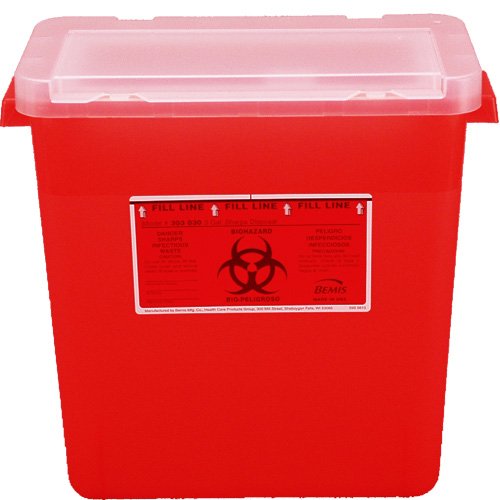
Place sharps waste in a red plastic sharps container with a biohazard symbol. Avoid using very large sharps containers.
When two-thirds full, close the lid and place autoclave tape over the lid and sides without blocking the vent holes.
Label with Principal Investigator (PI) name and room number.
3
Decontaminate/dispose

Sharps waste must be autoclaved prior to disposal or sent for incineration. Refer to Biohazardous Waste and Flow Charts for decontamination and disposal options at your location. Ask your department if a sharps disposal waste stream already exists.
After autoclaving, treated sharps waste has limited disposal options. Follow your Biohazardous Waste Flow Chart.
Biohazardous Lab Glass and Plastic Waste
Biohazardous lab glass and plastic waste includes items contaminated with biohazards (including recombinant or synthetic DNA/RNA) that could puncture a plastic bag. Lab glass and plastic items are not considered sharps, but they are capable of puncturing a plastic bag and can cause potential exposure to waste handlers. Use the Packaging Sharps and Lab Glass Waste poster to help identify your waste.
Identify

Biohazardous lab glass and plastic if contaminated:
- Micropipette tips
- Serological pipettes
- Syringes without needles
- Test tubes, swabs and sticks
- Any item that is not a regulated sharp but could puncture a bag
Package
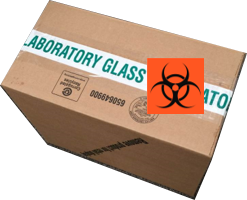
Collect biohazardous lab glass and plastic in a puncture-proof container such as a pipette box/keeper or a sturdy cardboard box.
If using a cardboard box, line with a biohazard bag and label with the biohazard symbol and "laboratory glass."
Label with PI name and room number.
Decontaminate/dispose
Biohazardous lab glass and plastic must be autoclaved prior to disposal or sent for incineration as regulated medical waste. Refer to Biohazardous Waste and Flow Charts for decontamination and disposal options at your location.
After autoclaving, treated lab glass and plastic waste can be disposed of as garbage.
Non-Hazardous Lab Glass and Plastic Waste
Non-hazardous lab glass and plastic waste includes items that could puncture a plastic bag. Lab glass and plastic items are not considered sharps, but they are capable of puncturing a plastic bag and can cause potential exposure to waste handlers. Use the Packaging Sharps and Lab Glass Waste poster to help identify your waste.
To determine if chemical containers are safe to dispose of as lab glass/plastic, refer to Empty Chemical Containers. Dispose of glass and plastic contaminated with radioactive material as radioactive waste.
Identify

Non-hazardous lab glass and plastic:
- Micropipette tips
- Serological pipettes
- Razor blades
- Syringes without needles
- Test tubes, swabs and sticks
- Non-contaminated broken glass
- Empty glass and plastic containers
Package
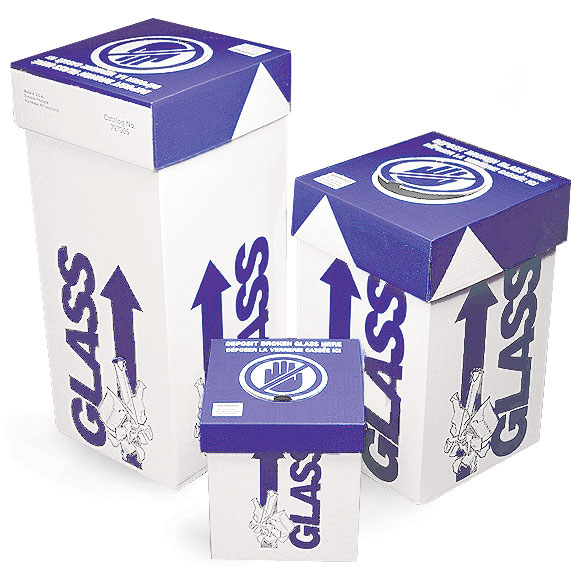
Package non-hazardous lab glass and plastic items in any sturdy cardboard box that will not weigh more than 25 pounds when full.
Seal with “Laboratory Glass” tape, or seal with tape and label as “laboratory glass."
Label with PI name and room number.
Dispose

Non-hazardous lab glass and plastic waste can be disposed of via the municipal waste as garbage if it is properly packaged and labeled.
Place lab glass boxes next to your regular garbage container for custodial pick-up.
Other Types of Sharps Waste
Trace chemo sharps waste
For trace chemo sharps waste, package in a yellow sharps container with a biohazard symbol. Do not autoclave yellow trace chemo sharps containers. Follow the instructions for packaging and disposal on the Chemotherapy and Hazardous Drugs page. Use the Sharps Waste poster for help.
Sharps waste that may not be safe to autoclave
- Sharps used with hazardous chemicals that are flammable, reactive, corrosive, or toxic may not be safe to autoclave. In this case, package in a red sharps container and ship as regulated medical waste for off-site incineration.
- Sharps used with chemicals classified as Extremely Hazardous Waste require collection as chemical waste. Contact EH&S Chemical Waste for guidance.
Emergency Response and Reporting
UW personnel are required to submit an incident report to Environmental Health & Safety for any work-related event that results in an injury, illness, exposure to hazardous materials, property damage, or fire, regardless of the work location. UW personnel are highly encouraged to submit work-related near-miss events. Visit the Incident Reporting page for more information.
Notify EH&S immediately (after first aid/medical care/emergency services) if the incident involves recombinant or synthetic nucleic acids or genetically modified organisms.
- During EH&S business hours: (8:00 a.m. to 5:00 p.m., Monday to Friday) call (206) 221-7770.
- Outside of EH&S business hours: call the UW Police Department at (206) 685-8973 to reach EH&S on-call staff.
Frequently asked questions
EH&S does not collect or treat sharps or other biohazardous waste. EH&S provides consultation and training for on-site or off-site treatment of sharps waste prior to disposal. Refer to the information on the Biohazardous Waste page for decontamination of biohazardous waste. Check with your department to see if a sharps disposal waste stream already exists.
There is no existing waste stream in Washington State for "non-contaminated" sharps. No matter the content, all red sharps containers and their contents are considered biohazardous and must be autoclaved prior to disposal or sent for off-site incineration.
Do not overfill sharps containers. If a sharps container is punctured or has needles sticking out, place the entire container inside a larger sharps container. Do not attempt to empty.
No, UW Surplus does not accept needles or sharps. Refer to the UW Surplus Preparing Items for Surplus webpage for a list of prohibited items.
Unopened needles, sharps or other items with needles attached still need to be disposed of in a red hard-sided sharps container with a biohazard symbol. Although unused, the needles still present a hazard to those handling waste. UW Surplus will not accept sharps.
- Do not handle the needle. If you are able to do so, leave a warning sign to help bring it to the attention of others who may pass by.
- Contact UW Facilities Services Customer Care at 206-685-1900. Trained personnel who can safely collect and dispose of needles can respond.
If your building does not have a personal sharps container, keep them in a sharps container or other rigid container, and then take all of your personal sharps home for disposal.
Follow the guidance for personal sharps disposal for per your county of residence: King County, Pierce County, or Snohomish County.
You can purchase Laboratory Glass tape from the Chemistry Research Stockroom in Bagley Hall and from the Life Sciences Building stockroom in B147A. Alternatively, you can clearly label boxes as “Laboratory Glass” yourself.